


10 Sep RESILCROPS Advances: Circular Economy Driving Agricultural Resilience
Researchers from the international consortium led by IPNA-CSIC and IPLA-CSIC have succeeded in protecting tomato crops from water stress using natural resources from the circular economy
La Laguna, 11 September 2026 — The international consortium behind the RESILCROPS project, co-funded by the European Commission through the Interreg Atlantic Area Programme, has announced its first scientific breakthroughs, which pave the way for a sustainable and effective approach to protecting island agriculture against droughts and extreme heat stress, through the recycling of food waste such as whey, or the utilisation of macro- and microalgae species that wash up on the Canary Islands’ shores carried by ocean currents. The initial results are highly promising for the development of biostimulants that substantially improve crops’ resistance to environmental stress.
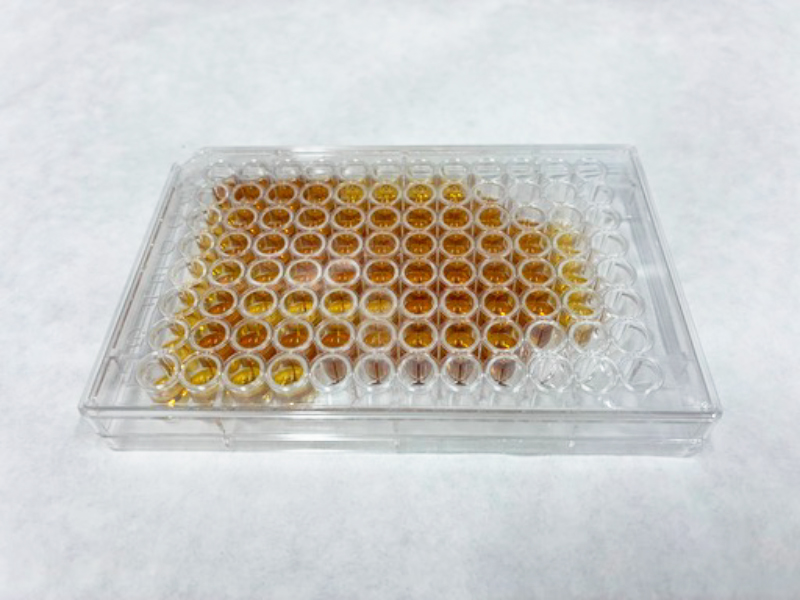
In in vitro laboratory trials using yeasts as an initial screening model, it was found that marine extracts enable them to maintain their growth under water-stress conditions.
Meanwhile, subsequent validation carried out on tomato plants showed that the application of these compounds significantly increases the plant’s weight and strengthens its structural defences.
Among the project’s most notable achievements is the utilisation of the invasive macroalgae Rugulopteryx okamurae and native strains of the cyanobacteria Lyngbya sp. and Rivularia sp., transforming an ecological threat into a highly valuable agricultural resource.
Furthermore, the use of certain lactic acid bacteria present in whey has been optimised to produce key defensive molecules, such as GABA, through high-yield bacterial fermentation.
This milestone represents a key step forward for agriculture in areas vulnerable to climate change, such as the Canary Islands, offering solutions based on the circular economy that reduce dependence on synthetic chemical inputs.
The RESILCROPS consortium comprises partners from four Atlantic countries: Spain, Portugal, France and Ireland. Nine beneficiaries are taking part, including eight universities and research centres, and the French company Polymaris, which specialises in marine biostimulants. From Spain, in addition to the IPNA-CSIC, which is leading the project, the University of La Laguna (ULL) and the Asturias Dairy Products Institute (IPLA-CSIC) are also taking part. Furthermore, the Cabildo Insular de Tenerife and the agricultural organisation COPLACA are collaborating as associate partners.
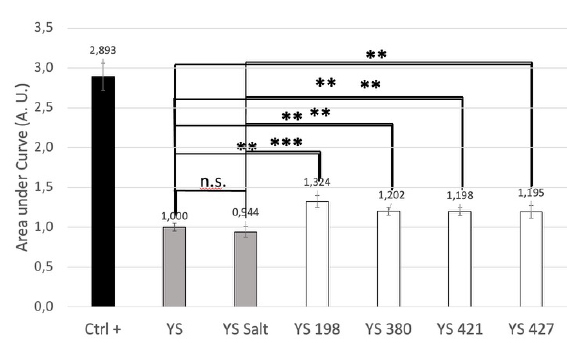
The experimental data confirm statistically significant improvements in growth rates compared with the untreated control groups.
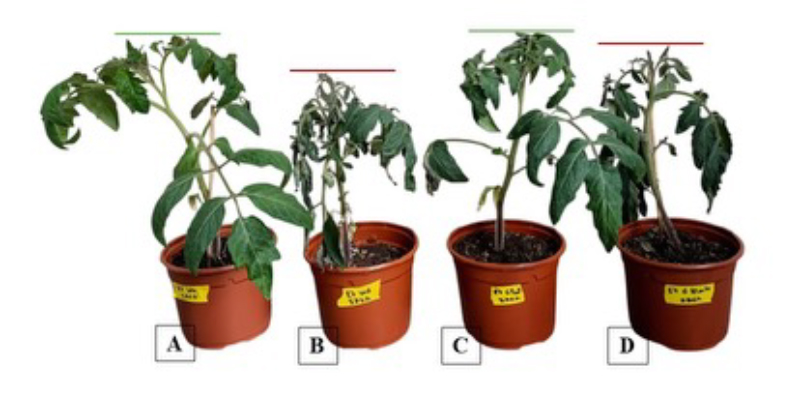
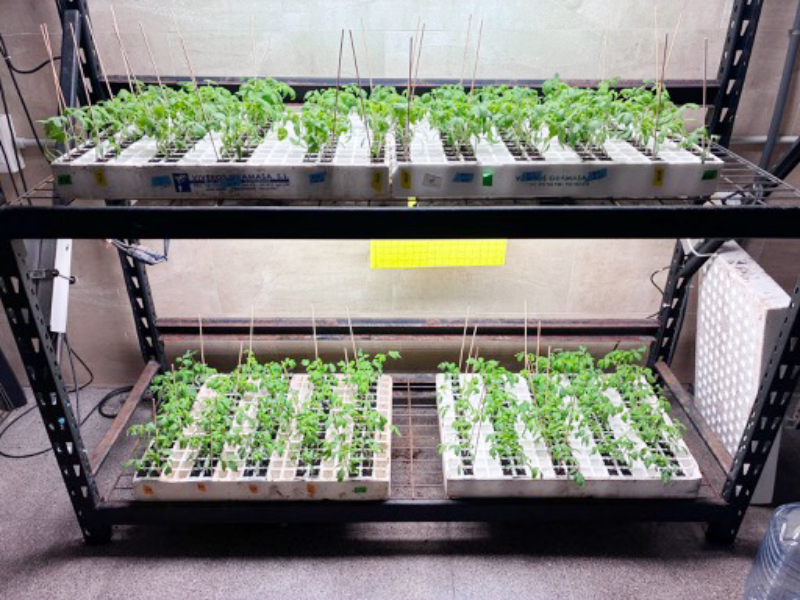
Validation in a growth chamber using plant cultures
Moving from in vitro platforms to in planta systems, growth chamber trials conducted with tomato plants enabled the determination of optimal foliar applications. GABA applications under water-deficient conditions and severe drought significantly increased the fresh weight (FW) of the plants and their structural defence, representing a promising step forward for sustainable, climate-smart agriculture.